Barcelona & Madrid

Software & IT

Who owns the code when freelancers or subcontractors write it? How do you protect an application against copies? What does a SaaS licence actually warrant? We advise software companies on the questions generic contracts do not answer, and on the EU rules that are starting to treat software like any other product.

What we do

The questions a generic contract does not answer.

Custom software development agreements

Scope, acceptance, and who owns what at the end.

Maintenance and support agreements

Service levels that mean something when they are breached.

Source code protection

Copyright, registration and escrow arrangements.*

Licensing structures

Perpetual, subscription and SaaS, and what each one actually warrants.

IP clauses in employment and freelance contracts

So ownership of the code does not end up in the wrong hands.

Integration and API agreements

Where your product meets somebody else’s.

* With our network of specialist partner firms.

 
Representative work

What we have done in this sector.

Anonymised: most of what we do is confidential.


Provided ongoing corporate counsel to the Spanish subsidiary of a German digital-solutions provider.


Frequently asked

Questions from software companies operating in Spain.

Who owns code written by an employee or a freelancer under Spanish law?

If an employee writes it in the course of their duties, the exploitation rights belong to the company unless otherwise agreed. If a freelancer or a subcontractor writes it, there is no such presumption: the assignment must be agreed in writing, and if the contract does not specify uses, duration and territory, the law limits it to what the contract’s purpose requires, to five years and to the country where it was signed. It is one of the first things an investor or buyer checks.

Legal basis: Arts. 43, 45 and 97.4 Spanish Intellectual Property Act (RLD 1/1996).
Not as such: the Patents Act excludes computer programs, although a computer-implemented invention with a technical character can be patented, in line with European Patent Office practice. Software is protected by copyright from the moment it is created, without registration. Registering it with the Spanish Intellectual Property Registry is optional but serves as evidence of ownership.
Legal basis: Art. 4.4(c) and 4.5 Patents Act 24/2015; arts. 10.1(i), 95 ff. and 145 Intellectual Property Act.
Regulation (EU) 2024/2847 applies to products with digital elements made available in the EU, including standalone software. Since 11 September 2026, manufacturers must report actively exploited vulnerabilities and severe incidents within 24 hours, including for products already on the market; the remaining obligations, such as security by design, apply from 11 December 2027. Fines reach €15 million or 2.5% of worldwide turnover.

Legal basis: Regulation (EU) 2024/2847, arts. 14, 64 and 71.

Under the new EU Product Liability Directive (2024/2853), yes: software, including AI systems and software supplied as a service, is treated as a product for defect liability. Member States must transpose it by 9 December 2026 (Spain had not done so as of October 2026), and it applies to products placed on the market from that date. It also covers defects caused by an update, or by the lack of one, where the update is within the manufacturer’s control.
Legal basis: Directive (EU) 2024/2853, arts. 4(1), 11 and 22, recital 13.


Protecting software assets in Spain?

Book a no-obligation first call. We’ll tell you plainly what it takes: time, cost and next steps.


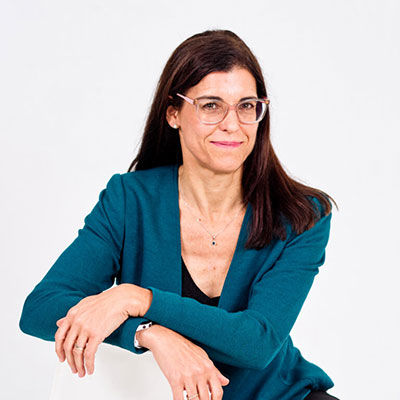
Sector lead

Nathalie Kühlmann, LIC. IUR.

Partner I Abogada I lic. Iur.
Leads our work in this sector.